
Sinsdar

T-Slot Nut Comparison

Ball-Spring vs Spring-Leaf Roll-In T-Nuts: XAHJ or XAHV?

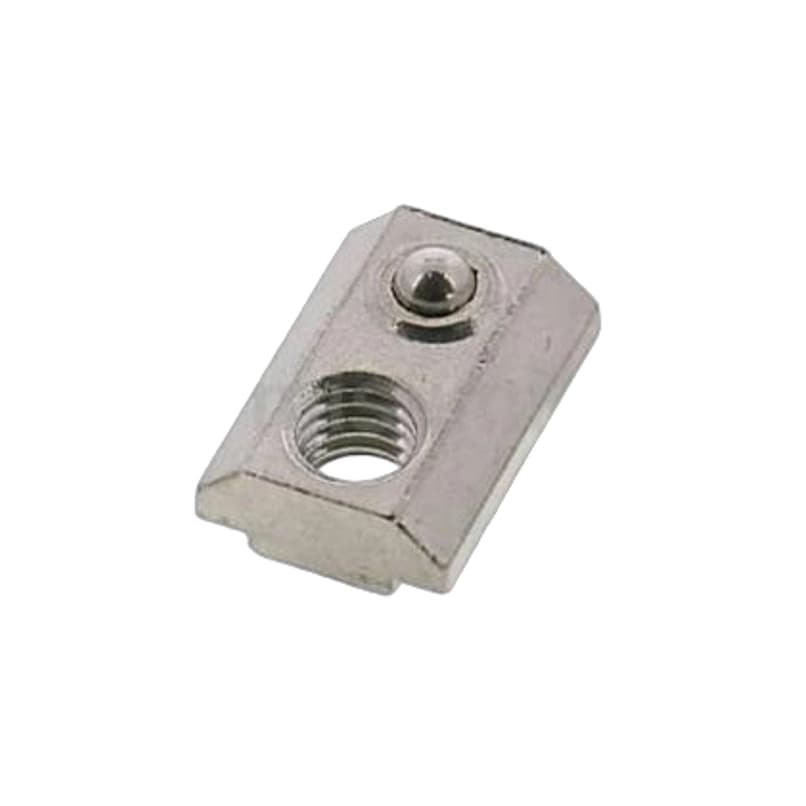
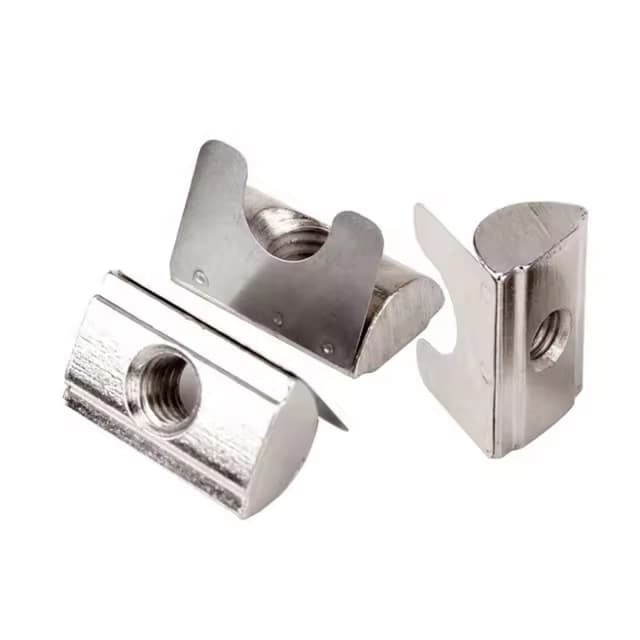
XAHJ and XAHV are both post-assembly T-nut families that can enter through the middle of a compatible slot. XAHJ uses a spring ball; XAHV uses one spring leaf. Both spring elements temporarily hold the nut before the bolt is tightened. Final clamping force comes from the tightened bolt.

Choose between them by matching the profile range, slot geometry, thread, dimensions, material, finish and preferred positioning design.

Compare XAHJ and XAHV

XAHJ and XAHV at a glance

Assembly stage

XAHJ Roll-In T-Nuts with Spring Ball
Post-assembly
XAHV T-Nuts with Spring Leaf
Post-assembly

How the nut enters

XAHJ Roll-In T-Nuts with Spring Ball
Tilt and roll it through the middle of the slot
XAHV T-Nuts with Spring Leaf
Tilt and roll it through the middle of the slot

Open profile end required

XAHJ Roll-In T-Nuts with Spring Ball
No
XAHV T-Nuts with Spring Leaf
No

Temporary positioning element

XAHJ Roll-In T-Nuts with Spring Ball
Spring ball
XAHV T-Nuts with Spring Leaf
One spring leaf; one end is fixed and the other flexes during insertion

Positioning directions

XAHJ Roll-In T-Nuts with Spring Ball
Horizontal, vertical and inverted slots
XAHV T-Nuts with Spring Leaf
Horizontal, vertical and inverted slots

Final clamping force

XAHJ Roll-In T-Nuts with Spring Ball
Tightened bolt
XAHV T-Nuts with Spring Leaf
Tightened bolt

Thread locking or vibration resistance from the spring

XAHJ Roll-In T-Nuts with Spring Ball
No
XAHV T-Nuts with Spring Leaf
No

Available product range

XAHJ Roll-In T-Nuts with Spring Ball
XAHJ21/23; EU 206/308/4010; M3, M4, M5, M6 or M8, with available thread sizes varying by profile series
XAHV T-Nuts with Spring Leaf
XAHV21/23/31; EU 308/408/4010/4510/5010; M4, M5, M6 or M8, with available thread sizes varying by profile series

Available materials and finishes

XAHJ Roll-In T-Nuts with Spring Ball
Carbon steel with zinc or chrome plating, depending on code
XAHV T-Nuts with Spring Leaf
Carbon steel with nickel or chrome plating, and SUS304 with vibratory polishing, depending on code

How the spring elements help during assembly

The spring ball or spring leaf presses against the inside of the profile slot and provides temporary positioning. This prevents the nut from sliding freely before the bolt is tightened and allows the installer to align the external component without continuously holding the nut.

The spring element is an installation aid. It does not create the final clamp load and does not make the thread vibration-resistant.

Installing XAHJ

Insert XAHJ directly by tilting and rolling it into the slot. The ball compresses as the nut passes through the opening. A bolt is not required for insertion.

If the nut is difficult to hold in a confined location, a bolt may be threaded one or two turns and used as an optional handle. This is a handling aid, not a required installation step.

View XAHJ Roll-In T-Nuts with Spring Ball

Installing XAHV

Insert XAHV through the middle of a compatible slot by tilting and rolling it into position. The spring leaf flexes during insertion and provides temporary positioning once the nut is seated. A bolt is not required for insertion.

No special tool is required. If needed, a normal hex key or flat screwdriver can help compress the spring leaf or guide the nut during positioning. Do not hammer the nut into the slot; a need for obvious hammering usually indicates that the selected nut and profile geometry do not match. Match the selected product row to the profile series, slot opening and internal dimensions before installation.

View XAHV T-Nuts with Spring Leaf

Handling and repositioning

During manual repositioning, XAHJ will generally move more smoothly because the ball creates point contact and may roll. XAHV will generally have more movement resistance because the leaf commonly creates line or area contact. Actual resistance can vary with spring preload, manufacturing variation and whether the ball rolls freely.

Contact occurs inside the slot. Under normal aligned installation, neither design rubs across the external visible profile surface. Internal marking is generally less likely with the ball design; a spring leaf has a relatively greater possibility of leaving rub marks on the slot bottom during repeated movement.

Both structures are normally removable, repositionable and reusable when undamaged, but no guaranteed cycle count is available. Suitability for reuse depends on the condition of the exact part.

Match the available product range

XAHJ starts with EU 20-series rows and includes M3 options for applicable profile series. XAHV starts with EU 30-series rows and includes carbon-steel and SUS304 options. The website XAHV range is EU-only and covers M4, M5, M6 and M8.

Use the product pages to match the exact profile series, slot opening, thread, dimensions, material and finish. Do not transfer a dimension or code between the two families.

Which one should you order?

  • Choose from XAHJ when a listed XAHJ row matches the profile and a spring-ball retaining design is required.
  • Choose from XAHV when a listed XAHV row matches the profile and a single spring-leaf retaining design is required.
  • If both product rows fit the dimensional requirement, decide from the required material, finish, thread options and preferred handling behaviour.

Frequently Asked Questions

Send your profile details for an XAHJ or XAHV quote

Include the profile series, slot opening, internal dimensions, thread, installation orientation, material or finish preference and quantity.

Browse T-Slot Nuts