XAHJ
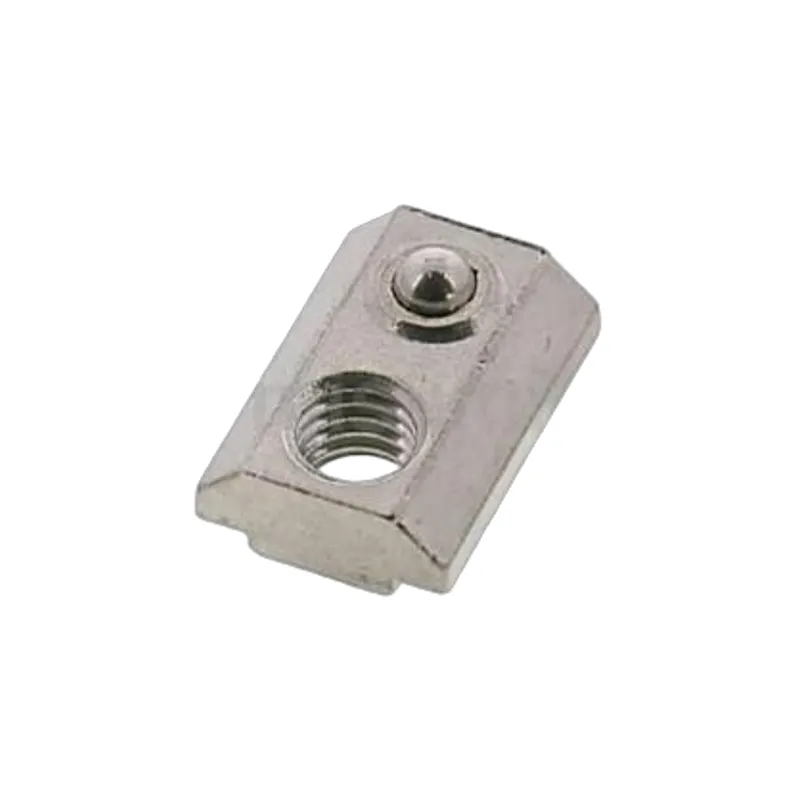
XAHJ Roll-In T-Nuts with Spring Ball
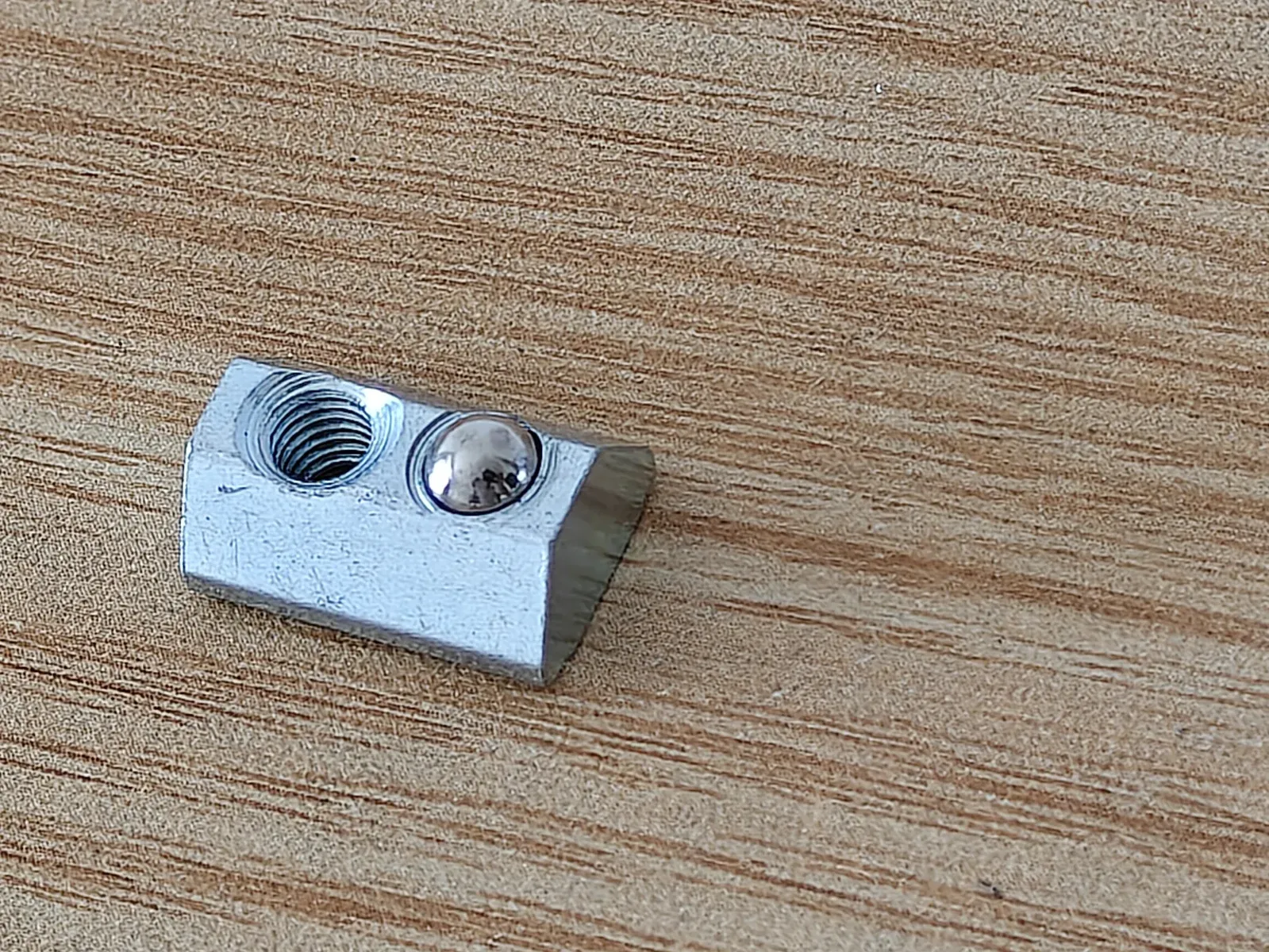
The visible ball belongs to XAHJ’s temporary positioning mechanism. It helps retain the nut before tightening; final clamping comes from the bolt.

T-Slot Nut Comparison
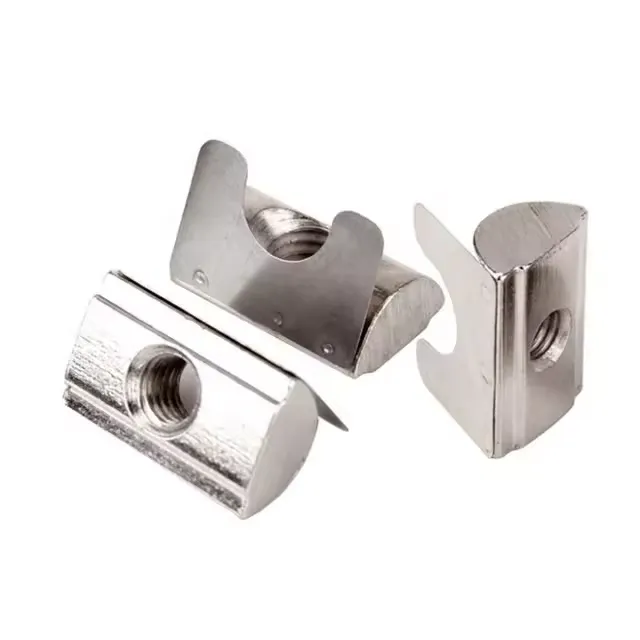
Both XAHJ spring-ball and XAHV spring-leaf nuts tilt and roll into a compatible slot without profile-end access. Match the variant to your slot, then compare the temporary positioning you need before tightening.
For a deeper slot, consider XAHV’s greater leaf support distance after checking the actual geometry. XAHJ generally slides more smoothly during adjustment. In both designs, the spring positions the nut; the tightened bolt provides final clamping.
XAHJ and XAHV both roll into a compatible slot. Here, the useful visual distinction is the small ball beside the thread versus the attached spring leaf.
XAHJ
The visible ball belongs to XAHJ’s temporary positioning mechanism. It helps retain the nut before tightening; final clamping comes from the bolt.
XAHV
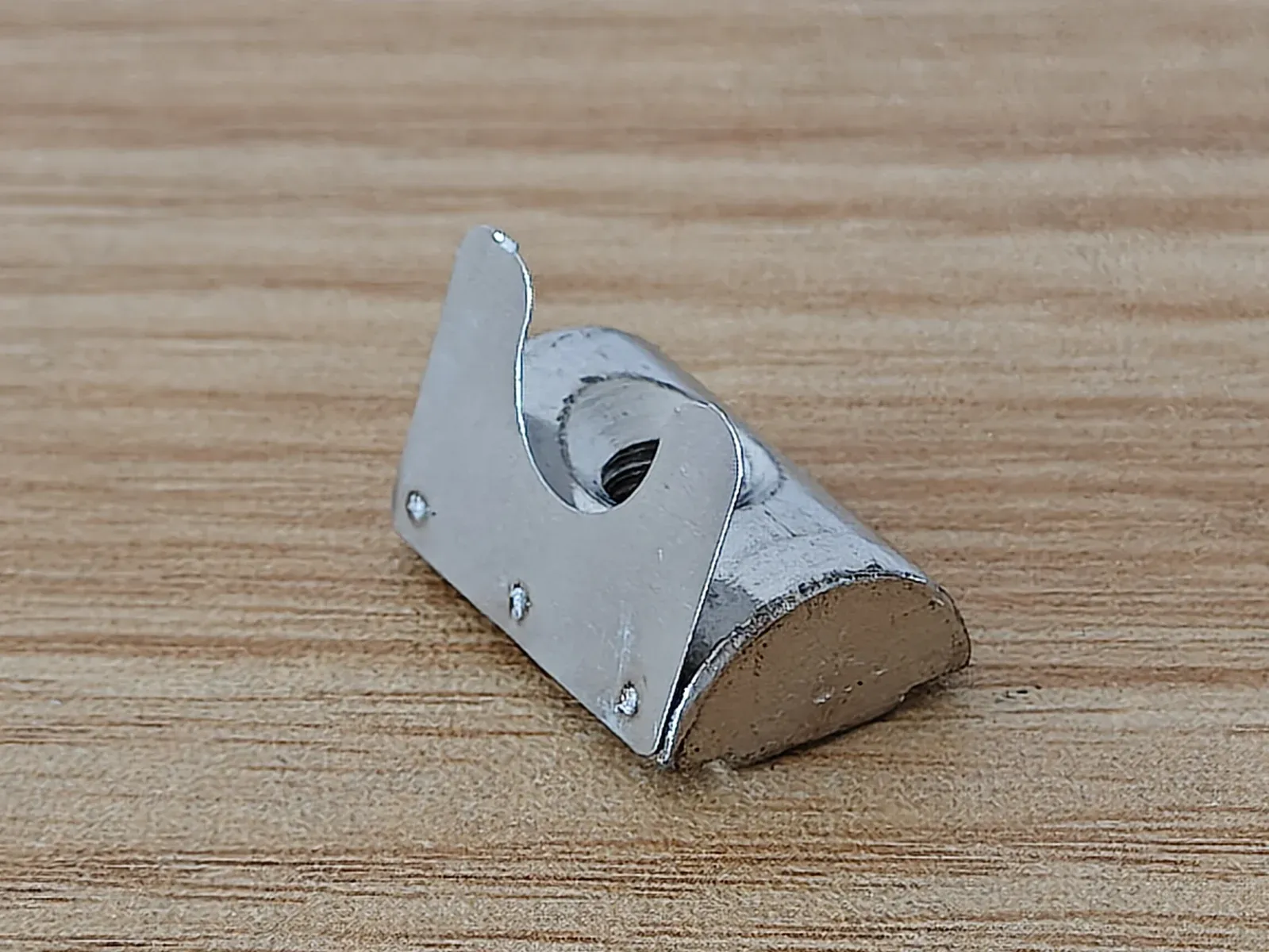
The leaf projects from the XAHV body. It can bridge a greater support distance for temporary positioning in a deeper slot, subject to the selected variant and slot geometry.
Representative samples, shown at different scales. These photos illustrate structure; use the selected specification and drawing to check dimensions and fit. See the installation guide for the available motion demonstrations.
| Selection point | XAHJ Roll-In T-Nuts with Spring Ball | XAHV T-Nuts with Spring Leaf |
|---|---|---|
| Assembly stage | Post-assembly | Post-assembly |
| How the nut enters | Tilt and roll it through the middle of the slot | Tilt and roll it through the middle of the slot |
| Open profile end required | No | No |
| Temporary positioning element | Spring ball | One spring leaf; one end is fixed and the other flexes during insertion |
| Positioning directions | Horizontal, vertical and inverted slots | Horizontal, vertical and inverted slots |
| Support distance before tightening | Check whether the selected ball design reaches the supporting surface in the actual slot | The leaf can bridge a greater support distance; verify the selected variant against the actual slot geometry |
| Manual movement inside the slot | Generally smoother with point contact and possible ball rolling; actual resistance varies | Generally greater resistance with line or area contact; repeated movement can leave internal rub marks |
| Final clamping force | Tightened bolt | Tightened bolt |
| Thread locking or vibration resistance from the spring | No | No |
| Available product range | XAHJ21/23; EU 206/308/4010; M3, M4, M5, M6 or M8, with available thread sizes varying by profile series | XAHV21/23/31; EU 308/408/4010/4510/5010; M4, M5, M6 or M8, with available thread sizes varying by profile series |
| Available materials and finishes | Carbon steel with zinc or chrome plating, depending on code | Carbon steel with nickel or chrome plating, and SUS304 with vibratory polishing, depending on code |
Insert XAHJ directly by tilting and rolling it into the slot. The ball compresses as the nut passes through the opening. A bolt is not required for insertion.
Insert XAHV through the middle of a compatible slot by tilting and rolling it into position. The spring leaf flexes during insertion and provides temporary positioning once the nut is seated. A bolt is not required for insertion.
For temporary positioning in a deeper slot, consider XAHV first: its spring leaf can bridge a greater support distance than a spring ball. Check the selected variant against the actual slot geometry. This positioning advantage does not imply greater final clamping force or load capacity.
Compare the actual internal slot dimensions with the selected product drawing. A nominal slot width or the presence of a spring does not establish fit. If the support geometry is unclear, send a profile cross-section for verification.
During manual repositioning, XAHJ will generally move more smoothly because the ball creates point contact and may roll. XAHV will generally have more movement resistance because the leaf commonly creates line or area contact. Actual resistance can vary with spring preload, manufacturing variation and whether the ball rolls freely.
Contact occurs inside the slot. Under normal aligned installation, neither design rubs across the external visible profile surface. Internal marking is generally less likely with the ball design; a spring leaf has a relatively greater possibility of leaving rub marks on the slot bottom during repeated movement.
The spring element positions the nut before tightening. Final clamping and any locking requirements belong to the complete bolted joint.
Send the model, drawing or photo you have. Add the quantity and delivery country if known; we can clarify the remaining details by email.