XAHC
XAHC Hammer Head T-Nuts
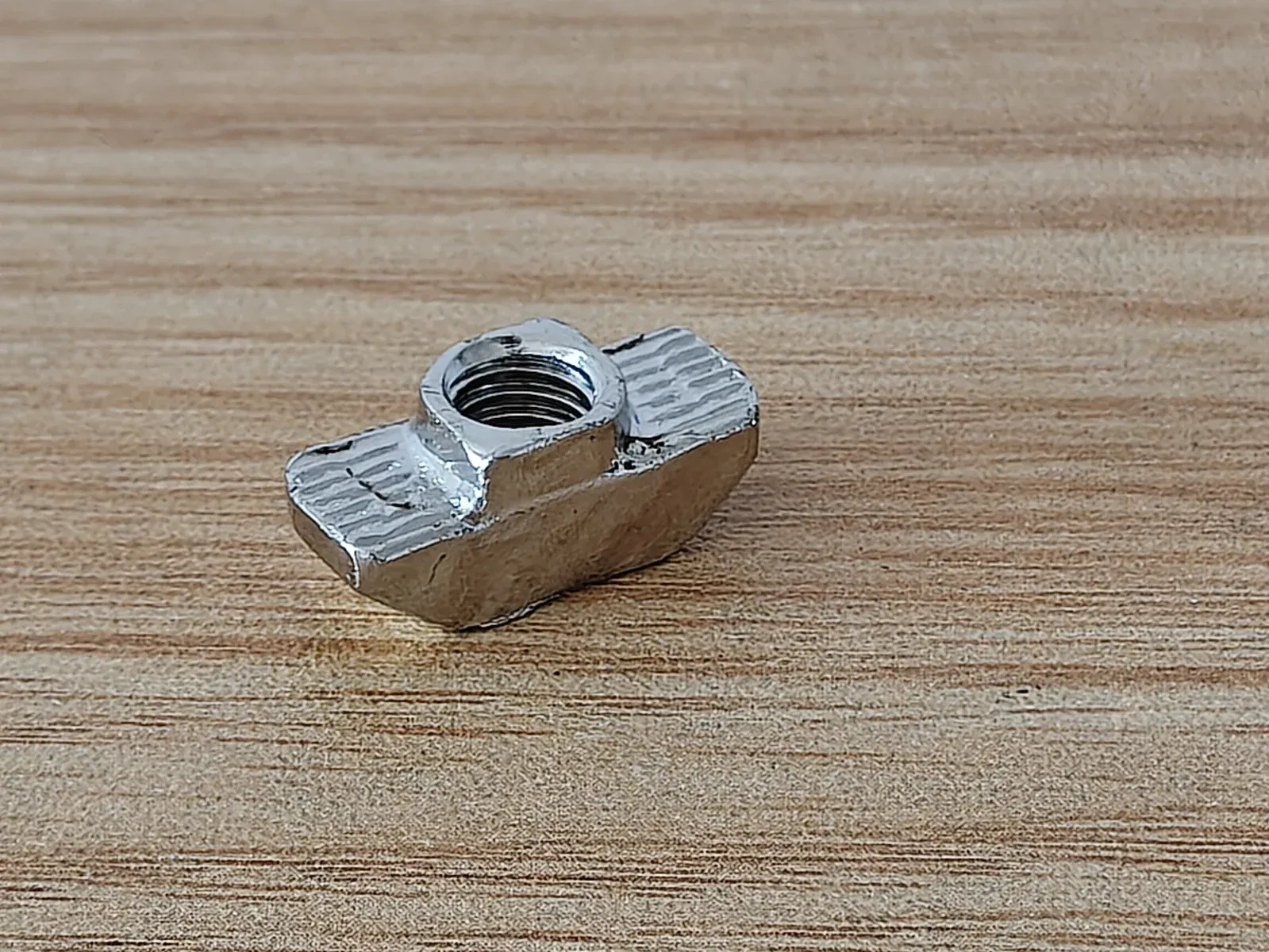
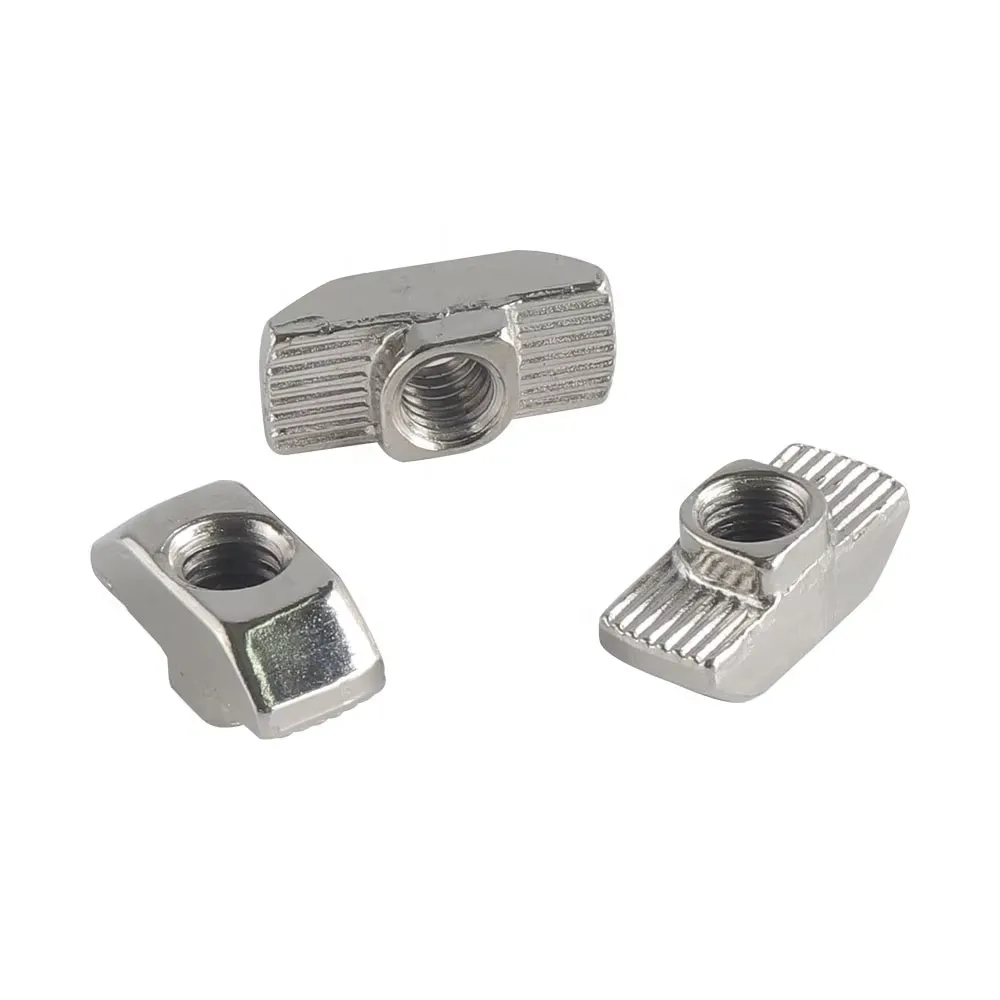
The XAHC sample has a raised step and toothed face. Installation requires narrow-side entry followed by a 90° turn in a compatible slot.

T-Slot Nut Comparison
Both XAHC and XAHQ can be installed through the slot after the frame is assembled. Choose between them by the available installation motion and the exact product row: XAHC enters narrow-side first and rotates 90 degrees, while XAHQ enters at an angle and rolls into position.
Neither family has a spring ball or spring leaf. Support the nut during vertical installation until the bolt begins to engage.
Both families enter through the slot opening, but they need different installation movements. Compare the head and body shapes before checking the available clearance.
XAHC
The XAHC sample has a raised step and toothed face. Installation requires narrow-side entry followed by a 90° turn in a compatible slot.
XAHQ
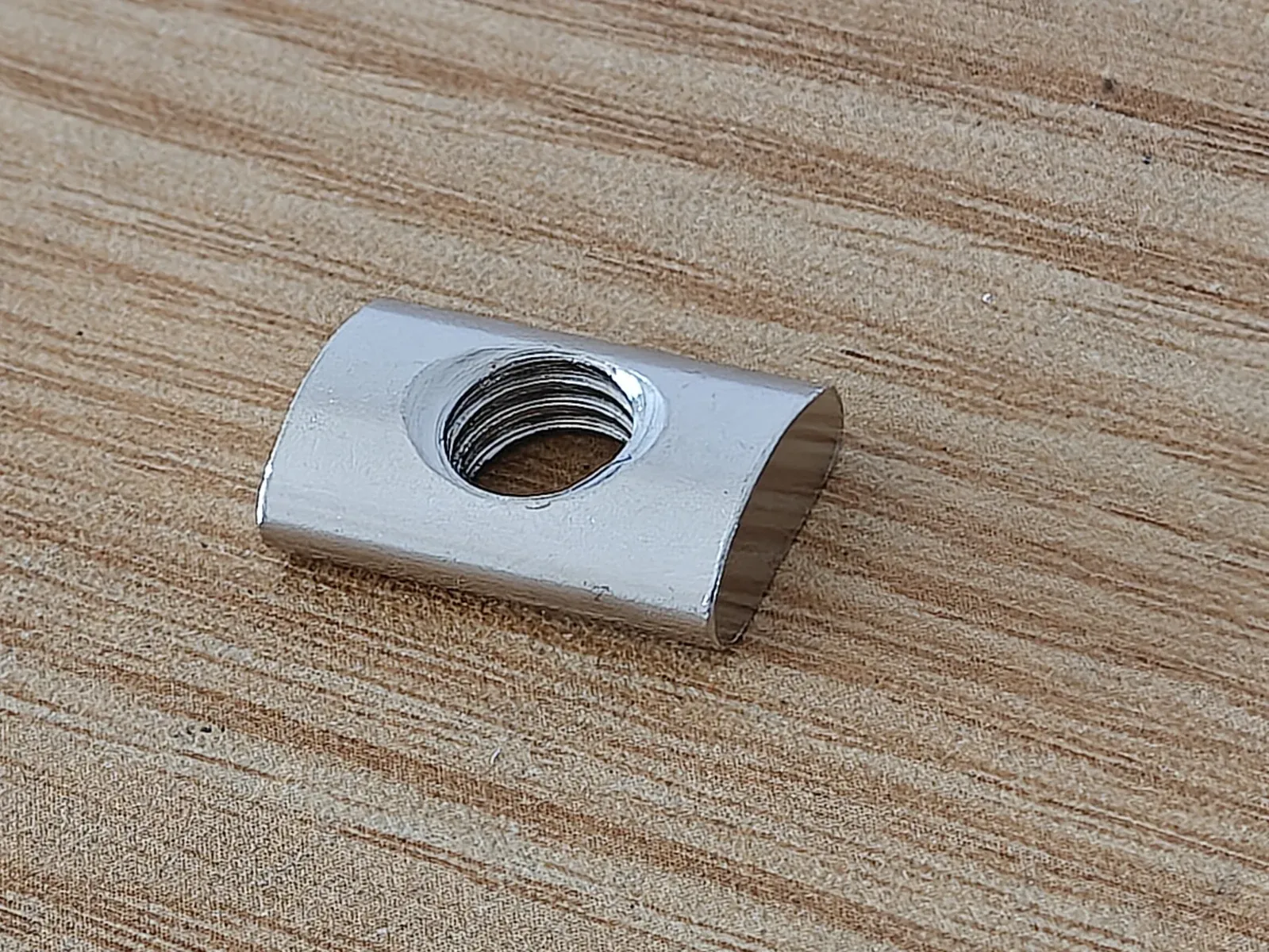
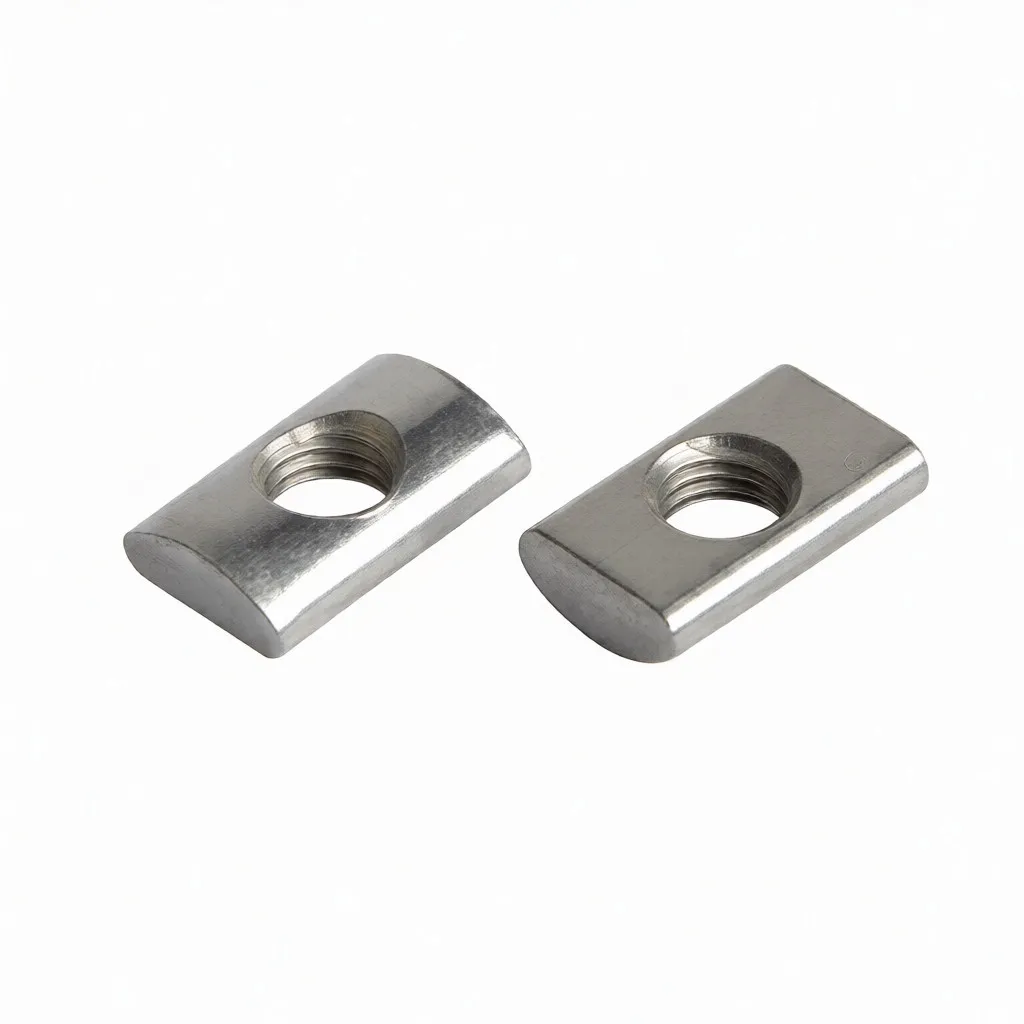
The XAHQ sample has a curved body and an internal thread. Its installation route is tilt-and-roll, so check the space needed for that movement.
Representative samples, shown at different scales. These photos illustrate structure; use the selected specification and drawing to check dimensions and fit. See the installation guide for the available motion demonstrations.
| Selection point | XAHC Hammer Head T-Nuts | XAHQ Roll-In T-Nuts |
|---|---|---|
| Assembly stage | Post-assembly | Post-assembly |
| How the nut enters | Insert the narrow side through the slot and rotate the nut 90 degrees | Tilt the nut through the slot opening and roll it into position |
| Open profile end required | No | No |
| Installation direction | Raised step and toothed surface face outward | Threaded hole faces outward |
| Bolt used during installation | A lightly engaged right-hand bolt normally drives the clockwise 90-degree rotation | A bolt is not part of the confirmed insertion method |
| Temporary spring retention | None | None |
| Vertical positioning before bolt engagement | Support the nut | Support the nut |
| Available product range | XAHC21/22/23/31; GB G306/G408 and EU 206/308/408/4010/4510/5010; M4, M5, M6 or M8, with available thread sizes varying by profile series | XAHQ21/22/23; GB G306/G408 and EU 308/408; M5, M6 or M8, with available thread sizes varying by profile series |
| Available materials and finishes | Carbon steel with zinc, nickel or chrome plating, and SUS304 with vibratory polishing, depending on code and profile system | Carbon steel with zinc, nickel or chrome plating, depending on code |
Place the XAHC nut through the slot with its narrow side aligned to the opening. The raised step and toothed surface face outward. Lightly engage a standard right-hand bolt, then turn the bolt clockwise so thread friction drives the nut through a 90-degree rotation.
The nut reaches its engaged position when the diagonal stop contacts the inner slot wall. The installer will feel a clear increase in resistance, and the raised step can be seen crosswise through the slot opening. A normal hex key for the mating bolt is sufficient; no special installation tool is required.
Turning counterclockwise moves the nut back toward the parallel position for removal.
Face the XAHQ threaded hole outward, insert the nut at an angle and roll it into position. The motion needs lateral space for the tilted body to pass through the opening and settle inside the channel.
XAHQ normally enters without using a bolt as an insertion handle. It has no spring retention, so hold it in place during vertical installation until the bolt starts engaging.
XAHC usually needs less lateral movement because its narrow side enters vertically before the 90-degree rotation. XAHQ needs enough side clearance to tilt and roll through the opening. This distinction can matter near panels, end closures and other components that limit hand or tool movement.
Installation space alone does not establish fit. The profile must also provide the channel depth, slot-lip geometry and internal clearance required by the selected nut.
For XAHC, confirm that the raised-step dimensions and the profile's slot-lip geometry allow the nut to rotate, seat and clamp the external component correctly. For XAHQ, confirm that the channel is deep enough for the nut body to complete the roll-in motion without bottoming out.
For both families, match:
Include the profile system, series, slot opening, internal slot dimensions, thread, available movement space and quantity.